Pixelverse brings memecoin characters into a gaming ecosystem beyond PixelTap
Updated -
Pixelverse is a crypto gaming ecosystem combining Telegram arcade games, memecoin characters and a separate cyberpunk browser-game project. Its catalog includes MemeBattle, MemeJump and PixelTap, while PIXFI is the ecosystem's token. The games use different mechanics, and an in-game currency balance has a different meaning from a tournament prize. The arcade emphasizes short competitive games; the cyberpunk project describes a wider world with robot companions, crafting and player interaction.
What can you play beyond PixelTap?
MemeBattle provides memecoin-themed battles, while MemeJump focuses on timed jumps within the wider Telegram game library.
The Telegram entry now uses the name Arcade by Pixelverse and identifies PixelTap as its previous name. That app-level change explains why older tap-to-earn descriptions can differ from the experience that opens today. The catalog still lists PixelTap alongside the other titles. The arcade is the collection; each game has its own activity and competition format.
The arcade advertises weekly tournaments alongside its game library. Leaderboards add a competitive structure to those events, while each event's rules determine who receives its prizes.
PixelTap's original robot economy
The original PixelTap format combined robot collection with real-time player-versus-player combat, usually shortened to PvP. Players adopted bots and upgraded them with in-game currency. Additional bots generated daily in-game currency, while battles offered another way to earn it. Referrals, social tasks and a daily combination puzzle added other progression activities. Daily visits added another source of in-game currency. Player profiles displayed game statistics, and friend challenges added a social layer to the robot battles.
How do tournament rewards differ from game coins?
Tournament rewards follow an event's eligibility and allocation rules, while game coins support the progression system that awards them. A large coin counter describes a game balance. It doesn't, by itself, establish a PIXFI allocation or a payment to a wallet.
Some MemeJump tournaments combined high-score prizes with random awards from a ranked player group. In those events, ranking affected qualification, while the selection method determined who received each award.
BOING's published tournament results also required recipients to have a wallet linked to their Arcade account.
Memecoin characters give the library a shared cast
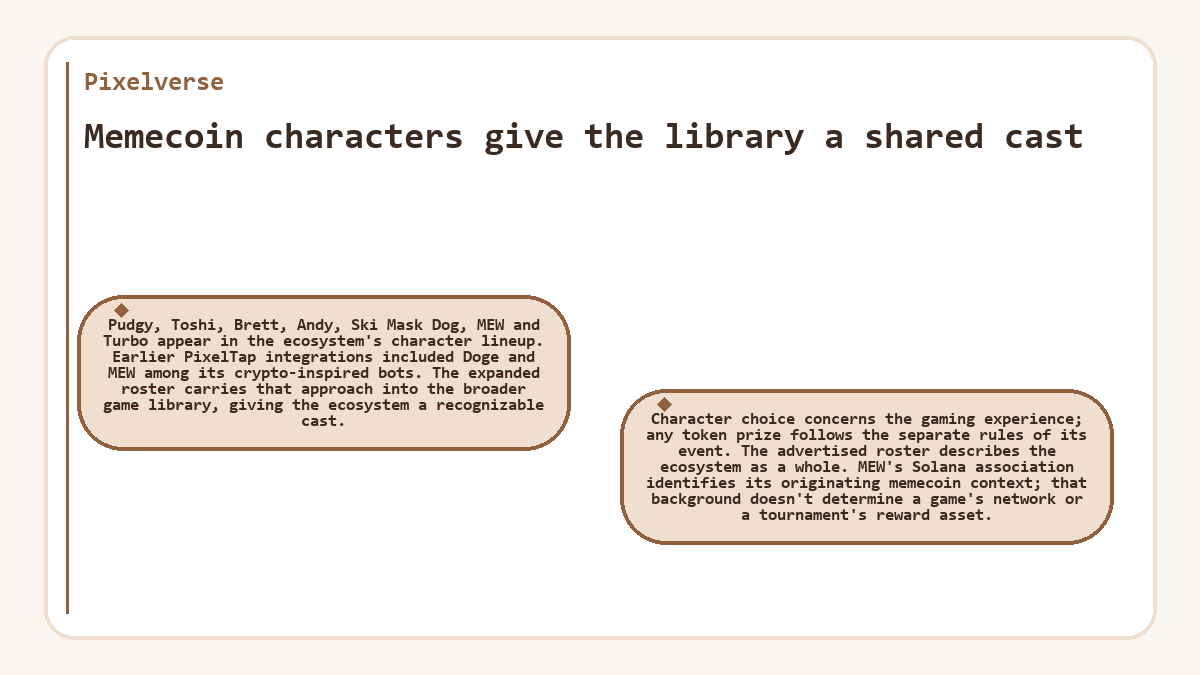
Pudgy, Toshi, Brett, Andy, Ski Mask Dog, MEW and Turbo appear in the ecosystem's character lineup. Earlier PixelTap integrations included Doge and MEW among its crypto-inspired bots. The expanded roster carries that approach into the broader game library, giving the ecosystem a recognizable cast. Character choice concerns the gaming experience; any token prize follows the separate rules of its event.
The advertised roster describes the ecosystem as a whole. MEW's Solana association identifies its originating memecoin context; that background doesn't determine a game's network or a tournament's reward asset.
The cyberpunk world extends beyond arcade play
PixelVerse Nexus presents a cyberpunk setting centered on custom robots, battles and trade.
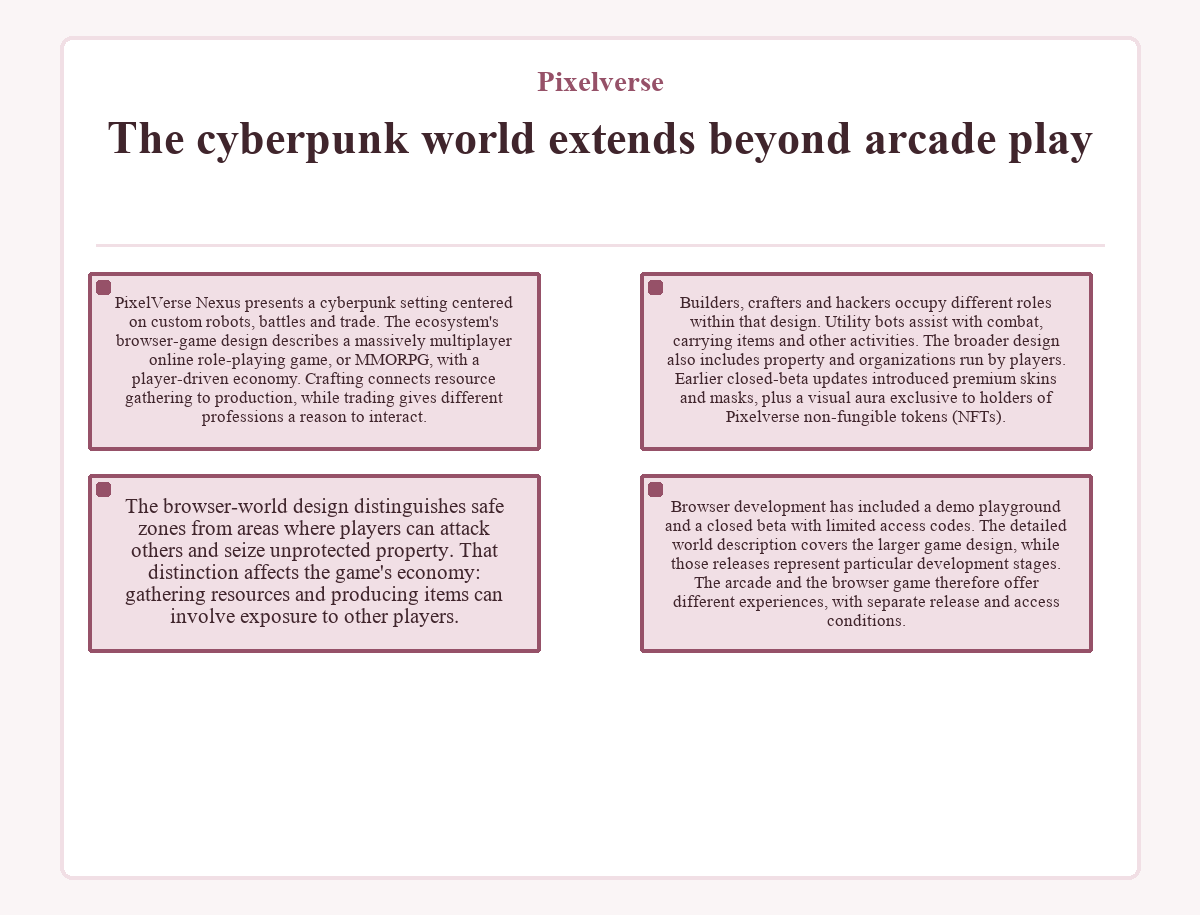
The ecosystem's browser-game design describes a massively multiplayer online role-playing game, or MMORPG, with a player-driven economy. Crafting connects resource gathering to production, while trading gives different professions a reason to interact. Builders, crafters and hackers occupy different roles within that design. Utility bots assist with combat, carrying items and other activities. The broader design also includes property and organizations run by players. Earlier closed-beta updates introduced premium skins and masks, plus a visual aura exclusive to holders of Pixelverse non-fungible tokens (NFTs).
The browser-world design distinguishes safe zones from areas where players can attack others and seize unprotected property. That distinction affects the game's economy: gathering resources and producing items can involve exposure to other players.
Browser development has included a demo playground and a closed beta with limited access codes. The detailed world description covers the larger game design, while those releases represent particular development stages. The arcade and the browser game therefore offer different experiences, with separate release and access conditions.
What does PIXFI do within the ecosystem?
PIXFI is the ecosystem token, with trading, crafting and battling among the uses described for the broader game economy. Its token specification identifies Ethereum's ERC-20 standard. The PIXFI token specification sets a total supply of 5 billion tokens. That figure describes total supply, not circulating supply or an amount that an individual player can claim.
The intended uses also reach game development through the Pixelverse SDK, a software development kit for integrating games. That gives the token design a broader scope than one game's upgrade currency. A particular reward campaign still needs to specify whether it awards PIXFI, another asset or in-game currency.
Social-gaming plans include Base and Farcaster
Telegram provides the arcade entry, while the project has also announced expansion to Base and Farcaster. The names describe different parts of that plan: Telegram hosts the mini-app experience, Base supplies the blockchain context and Farcaster supplies a social platform. The expansion announcement connected gaming with social activity and described a future reward pool specifically for active Farcaster participants. That participation condition gave the proposed pool a narrower audience than the entire Telegram player base.
Choose a game by the outcome you want
A score-focused session and a token-prize campaign ask different things of the player. The arcade provides games and rankings; an event adds the conditions that turn a performance into a possible award.
- Choose MemeJump when timed jumping is the activity you want.
- Choose a battle title for character combat, using that game's rules rather than assuming the original PixelTap mechanics apply.
- Treat an in-game coin balance as game progress unless the applicable rules explicitly provide token redemption.
- Assess a prize event through its ranking or selection rules, entry window and any wallet-linking requirement.
- Choose the browser-world experience for its quests, crafting and robot companions if the particular release offers those features and you meet its access conditions.
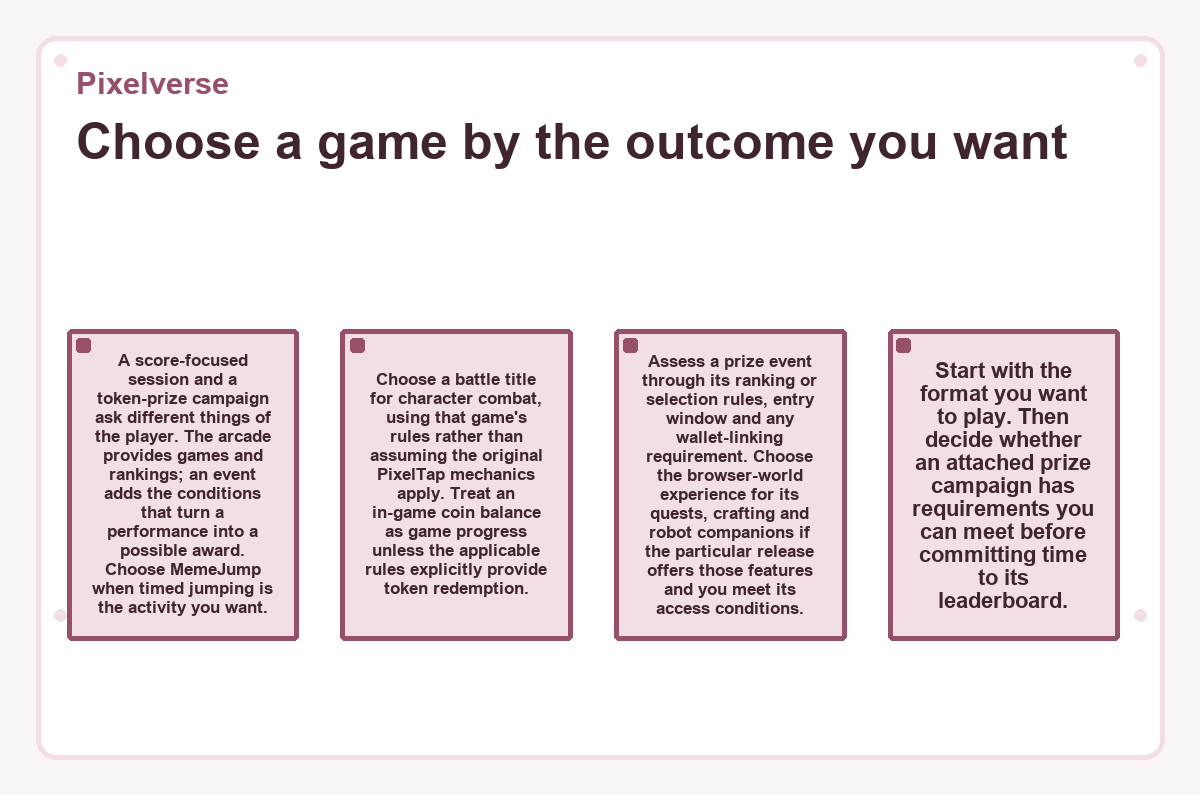
Start with the format you want to play. Then decide whether an attached prize campaign has requirements you can meet before committing time to its leaderboard.
Pixelverse: common questions
Do I need a credit card to start playing?
The advertised arcade entry doesn't require a credit card. That covers starting the gaming experience. Optional purchases, collectibles and token interactions are separate activities, with requirements tied to the particular feature.
Does playing as Pudgy require a Pudgy Penguins NFT?
Pudgy's announced PixelTap integration let players use the character without owning a Pudgy Penguins NFT. That permission covered playing and fighting with Pudgy in PixelTap. Other NFT-related benefits have their own eligibility conditions.
Why do older PixelTap instructions mention eight-hour claims?
Older instructions describe an earlier PixelTap currency system that allowed in-game claims every eight hours. A later daily-reward update removed the need for those repeat check-ins by introducing one-click daily collection. The collection schedule is specific to the app version and reward feature.
Can friends challenge each other in MemeJump?
MemeJump introduced a friend-challenge feature that compares players' scores. It adds a direct scoring contest to social play inside Telegram. Token prizes belong to separately defined reward events, so the challenge feature alone doesn't establish entry into a prize-paying tournament.
What was PixelFest?
PixelFest brought the gaming community together through in-person events in Seoul, Hong Kong, Istanbul and Lagos. The events supported meetings between players and the team, along with feedback about the games. They formed part of the ecosystem's community activities alongside its online channels.
Does the ecosystem include work from outside creators?
The ecosystem includes third-party developers and outside intellectual property alongside its own projects. Huxley, a project by Ben Mauro, appears in its broader creative showcase.
Have community contests awarded PIXFI outside the games?
Pixelverse has run social contests that awarded PIXFI for community activity, including contributions ranked by engagement. Those campaigns used their own entry windows and winner-selection rules. They offered a separate way to participate in community rewards outside a game's scoring system.